


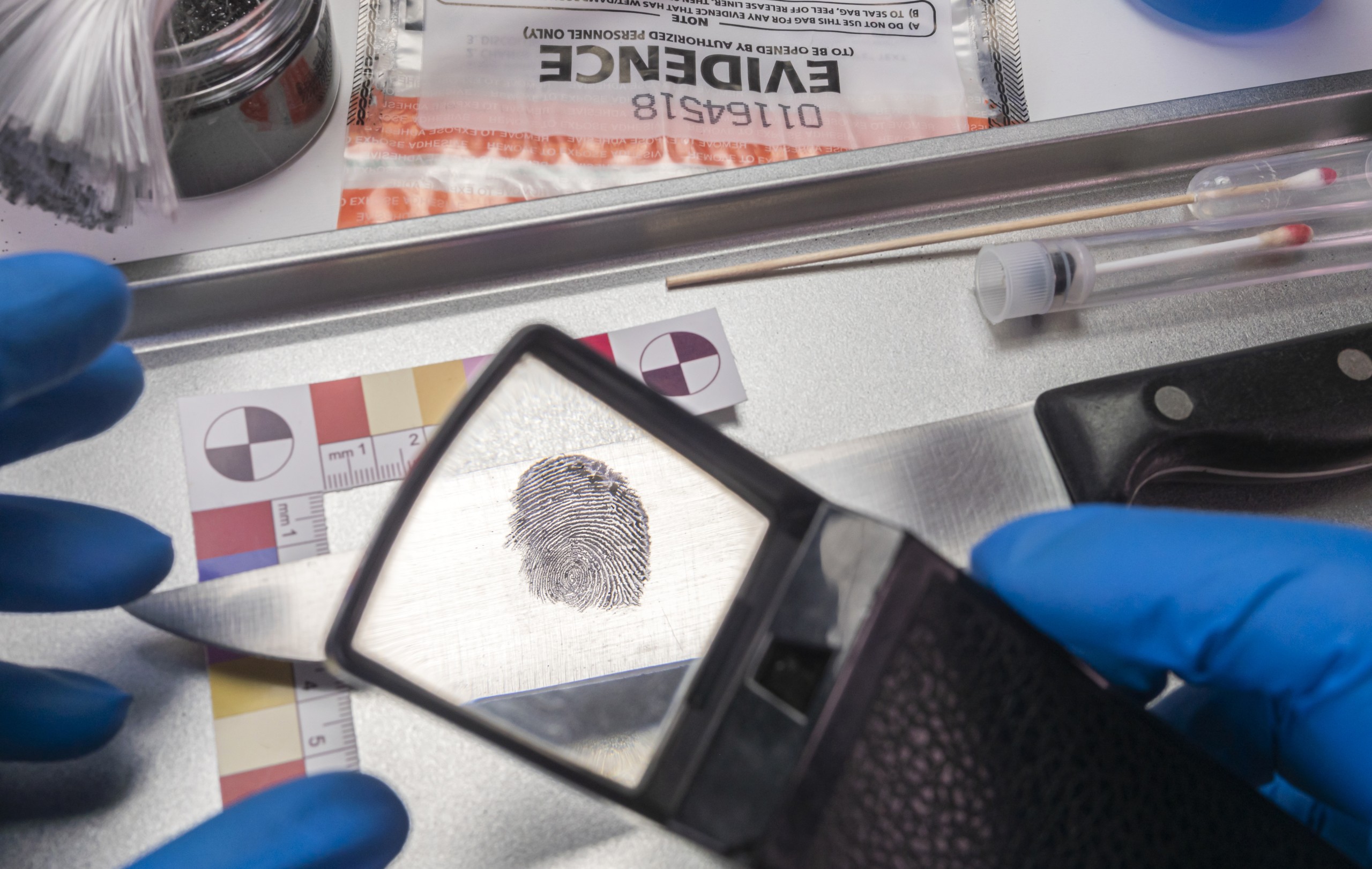
DIGITAL FORENSICS:
Computerized legal sciences are a way of revealing and translating electronic information. The objective of the procedure is to safeguard any confirmation in its most unique structure while playing out an organized examination by gathering, distinguishing, and accepting the computerized data with the end goal of remaking past occasions. The connection is frequently for utilization of information in an official courtroom; however computerized criminology can be utilized as a part of different occasions. PC crime scene investigation is the act of gathering, examining, and covering advanced information in a legitimately allowable way. It can be utilized as a part of the recognition and anticipation of wrongdoing and in any debate where proof is put away digitally. PC crime scene investigation takes after a comparable procedure to other legal trains and faces comparative issues. The evidentiary way of computerized criminological science requires thorough benchmarks to face round of questioning in court. Thus, there have been endeavors by associations like the National Institute of Standards and Technology, which distributed the “Manual for Integrating Forensic Techniques into Incident Responses.” In spite of this, there are a few difficulties confronting advanced criminological agents:
How can one copy or safeguard proof without knowing the duplication itself intrinsically changed the information?
Courses of events are basic for demonstrating who did what, and when. Be that as it may, computerized time stamps are famously truant, or can without much of a stretch be parodied, in advanced information. To have the capacity to state indisputably that Action A brought about Result B, the idea of repeatability must be presented. This is extremely troublesome with computerized crime scene investigation.
Employment of Digital Legal Sciences:
There are couples of territories of wrongdoing or debate where PC legal sciences can’t be connected. Law authorization organizations have been among the soonest and heaviest clients of PC crime scene investigation and thus have regularly been at the bleeding edge of improvements in the field. PCs may constitute a ‘scene of a wrongdoing’, for instance with hacking or refusal of administration assaults or they may hold proof as messages, web history, records, or different documents significant to violations, for example, murder, capture, misrepresentation, and medication trafficking. It is not only the substance of messages, records, and different documents which might hold any importance with agents additionally the “metadata” connected with those records. A PC legal examination may uncover when a report initially showed up on a PC, when it was last altered when it was last spared or printed, and which client did these activities. All the more as of late, business associations have utilized PC crime scene investigation to their advantage in an assortment of cases, for example;
1. Intellectual Property burglary
2. Industrial undercover work
3. Employment question
4. Fraud examinations
5. Forgeries
6. Bankruptcy examinations
7. Inappropriate email and web use in the workplace
8. Regulatory consistency
Digital Forensics and the Legal System:
The effect of data innovation on the world gives boundless advantages to people, businesses, commerce, and industry. Sadly, as innovation grows so does the weakness of frameworks to disappointment, unauthorized access, and to assault. In a previous couple of years, law requirement organizations have seen an expansion in PC-related offenses including misrepresentation, hacking, hardware abuse, digital stalking, theft, falsification, badgering, segregation, damage, copyright encroachment, security infringement, illicit spreading of obscene materials, robbery, and infection assaults. The 2005 FBI PC wrongdoing study uncovered that 75.1% of the 1762 associations brought about money-related misfortune due to PC security occurrences. To be sure, the aggregate evaluated loss of 313 respondents of the CSI/FBI 2006 review added up to $52,494,290 (Gordon et al., 2006). PC what’s more, law implementation callings have been tested by the element and advancing nature of PC wrongdoing to create mastery to battle these wrongdoings through the utilization of the gathering and investigation of advanced proof (Vacca, 2005).
This paper displays a review of lawful issues in PC legal sciences. Further, it investigates zones inside the lawful framework where computerized criminological proof is well on the way to be addressed, which incorporates case locale; seek furthermore, seizure, proof safeguarding, examination, and inquiries identifying with the investigation.
Issues in Evidence:
Biros and Weiser (2006) characterize advanced crime scene investigation as “logical information and strategies connected to the ID, accumulation, conservation, examination, and investigation of data put away or transmitted in parallel structure in a way worthy for application in legitimate matters”. The computerized criminological examination requires a characterized methodology that conforms to industry hone, authoritative practice, and proper laws, whether as a component of a criminal examination or as a component of a more broad security episode reaction. The strategy and apparatuses utilized by legal agents may shift, however, the procedure, by and large, incorporates arranging, obtaining, conservation, examination, and reporting as appeared in the table below. Displaying computerized confirmation is a one-of-a-kind legitimate test confronting PC criminological experts (Kenneally, 2002). Proof in lawful cases is conceded or not conceded in light of the relative weight of its probative and biased worth (Johnson, 2005). Given that the lawful framework is in light of points of reference, legal examiners must present union and consistency in the growing field of extricating and looking at the proof. The following table shows the forensic investigation processes:
| Process | Description |
| Distinguishing | The proof incident is perceived as requiring examination. Activated by the discovery of anomalies in a framework, data around wrongdoing et cetera. |
| Pursuit and seizure | Obtain court orders, and plan instruments and methods. Receive a procedure that expands the accumulation of untainted confirmation and minimizes sway on a casualty. |
| Conservation | Involves finding a way to stop or keep any action that can harm computerized data being gathered.Comprises of operations, for example, ceasing continuous cancellation forms, keeping individuals from utilizing PCs amid accumulation, and utilizing the most secure approach to gathering data. |
| Examination | Systematic hunt of confirmation about the occurrence being explored.Examination of PC media, for example, floppy circles, hard plate drives, reinforcement tapes, CD-ROM, and whatever other media is used to store information.Information articles may incorporate timestamps, log documents, information records containing particular expressions, and so forth. |
| Investigation | Evidence examination is required to distinguish the culprit of wrongdoing, case harms, and shield copyrights.Includes deciding criticalness, recreating information parts of information, what’s more, making a few determinations taking into account the proof gathered.May require the utilization of instruments, and tests may likewise be accomplished more than once to bolster the wrongdoing hypothesis.Specialized learning is required to embrace a viable examination process. |
| Reporting | Translating, outlining, and giving a few conclusions on the examination of the confirmation.The presentation ought to be in a layman’s dialect. |
Most cutting edge noxious projects are crossbreeds that actualize a wide range of advances. Because of this, any classification of a noxious project may incorporate projects with keylogger (sub) functionality. The quantity of spy projects distinguished by Kaspersky Lab every month is on the expansion, and a large portion of these projects use keylogging innovation.Digital Data Hiding Techniques:
Information stowing away is a product advancement procedure particularly utilized as a part of item-arranged programming (OOP) to cover up inward protest points of interest (information individuals). Information covering up guarantees restrictive information access to class individuals and ensures object trustworthiness by avoiding unintended or proposed changes.
When all is said in done, data stowing away suggests vagueness implanting data (message or metadata) into the host signal (pictures, video, sound, content, and so forth.) for an assortment of uses for example, steganography, content security, proprietorship insurance, unlawful duplicate counteractive action, utilization following, content conservation, and so on. High inserting limit, insignificant installing mutilation, vigor to enemy assaults, low false positive rate, low blunder likelihood of got information, and so forth is the wanted elements of an information concealing plan.
The advancement of information concealing strategies requires numerous outline and quality tradeoffs, i.e., the unintelligibility of the installed data, implanting limit, and strength of the inserted data. Constancy, limit, and vigor together characterize what is known as the information covering up the execution triangle. These three information-concealing execution measures are associated and it is difficult to amplify them all the while. When all is said in done, taking into account the utilization of information covering up nearby, maybe a couple of vertices of this execution triangle can be streamlined while keeping the remaining parameter(s) inside worthy limits. For instance, information concealing plans utilized for possession security require higher inserting quality to withstand altering assaults yet require moderately bring down inserting limit, in this manner hearty information concealing plans can be utilized for this application. Then again, information-concealing plans utilized for fingerprinting require a higher implanting limit but just direct inserting quality.
The heartiness of the installed data against deliberate and unexpected assaults is the most attractive component of information-concealing plans. These assaults incorporate separating, slashing, scaling, expansion of white and hued clamor, re-sampling, lossy pressure (JPEG, MPEG), time-and recurrence scaling, computerized to simple transformation, and requantization. In view of information-concealing applications, information-concealing plans can be characterized into taking after major classifications:
Steganography investigates techniques to conceal the presence of shrouded messages. These strategies incorporate undetectable ink, microdot, computerized signature, secret channel, and spread range correspondence.
Digital Watermarking alludes to a procedure of subtle implanting data (watermark) into electronic media keeping in mind the end goal to give content insurance and/or content validation. Watermarks can be utilized to track the copyright and responsibility for electronic media. Computerized watermarking and utilization of steganography strong to enemy assaults.
Digital Fingerprinting is a technique for embeddings exceptional names or distinguishing proof numbers into computerized content preceding appropriation. The advanced fingerprinting innovation is regularly used to implement DRM arrangements. The inserted unique mark can be utilized to follow down the offenders who utilized their substance for an unapproved reason.Information Hiding: Required Characteristics
Information concealing plans are described by the quantity of characterizing properties. When all is said and done, an information-concealing plan is expected to withstand against regular information controls, for example, expansion of while and hued clamor, lossy pressure, computerized to-simple transformation, rescaling, requantization, resampling, sifting, group transformation, encryption, decoding, scrambling, and so forth. What is more, vigor against dynamic enemy assaults the length of assault channel mutilation is beneath discernible bending in the contorted media are likewise coveted properties of the hearty information concealing plans. In any case, the relative significance of every property relies upon the information-concealing application. For instance, the sound watermarking framework for duplicate control application ought to withstand a brief time vitality proportion assault a dynamic enemy may utilize this assault to misdirect the indicator. In any case, such power may be unessential for show-checking applications. Accordingly, the execution of a given information-concealing plan ought to be assessed in view of the fundamental application, an information-concealing plan is below:
These are the alluring characteristics of information-concealing plans:
Robustness: Robustness measures the capacity of inserted information or watermark to withstand deliberate and unexpected assaults. Accidental assaults for the most part incorporate normal information controls, for example, lossy pressure, advanced to-simple change, re-sampling, requantization, and so on. In contrast, deliberate assaults cover a wide scope of media debasements which incorporate expansion white and hued commotion, rescaling, pivot (for picture and video watermarking plans), resizing, trimming, irregular hacking, and separating assaults. In this paper, power execution of the proposed information stowing away plans is assessed against these assaults alongside benchmark assaults, e.g. StirMark benchmark assaults for both pictures and in addition sounds.
Fidelity: Fidelity measures the perceptual closeness between the host media and its information implanted form. With a specific end goal to meet the devotion imperative of the installed data, the perceptual twisting acquainted due with implanting ought to be beneath the concealing edge evaluated in view of the HAS/HVS and the host media.
Capacity: The capacity of a data-concealing plan alludes to the measure of data that an information-concealing plan can effectively install without presenting perceptual bending in the stamped media.
Blind or Informed Detection: This property identifies with the accessibility (or inaccessibility) of the host information at the finder for the data identification process. If the host information is accessible at the finder for the watermark identification process which is eluded as educated recognition or private identification. Educated identification is by and large utilized for fingerprinting, information verification, and temper recognition. Then again, if the host information is not accessible at the identifier which is known as visually impaired or open recognition. Blind identification is ordinarily utilized for proprietorship security, copyright assurance, and so on applications.
False Positive Rate: False positive rate compares to the recurrence of distinguishing inserted data in an unmarked media. A false positive rate is an exceptionally basic parameter of information stowing away for substance insurance applications, for example, possession assurance, fingerprinting, gadget verification, and so on.
Multiple Watermarks Capability: Data concealing applications, for example, fingerprinting require inserting more than one imprint in the same host media with a specific end goal to implement DRM approaches. For instance, consider a circumstance where the proprietor and the chain of wholesalers of a media item need to insert their imprints (serial numbers or labels) to keep the hint of substance use and follow a backstabber. For such applications different watermarks implanting is an alluring component for a given information-concealing plan.
Cost: Computational expense of data installation and location procedure is another assessment paradigm of information concealing plans that are basic for constant applications, such as show checking, online substance verification, and so forth. Then again, for possession evidence applications this property is not that basic.
Challenges of Digital Forensics:
Crime scene investigation is changing in the advanced age, and the legitimate framework is as yet making up for lost time with regards to appropriately utilizing computerized proof. Comprehensively, advanced confirmation is data found on an extensive variety of electronic gadgets that are helpful in court as a result of their probative worth. It resembles what might as well be called a unique mark or a sloppy boot. Nonetheless, computerized proof tendered in court regularly neglects to meet the same exclusive requirements expected of more settled crime scene investigation rehearses, especially in guaranteeing the confirmation is the thing that it indicates to be.Innovation Changes Proof:
This is not the first occasion when that innovation has affected the way confirmation is accumulated and introduced in courts. What’s more, it’s not the first occasion when there have been issues in the way new confirmation is utilized. There is still an incredible verbal confrontation in the lawful world over the utilization and unwavering quality of DNA confirmation, for instance. This is presently being reflected in later court challenges over the utilization of computerized confirmation.
The exceptional properties and specialized many-sided quality of computerized confirmation regularly make it significantly all the more difficult, as courts think that it’s hard to comprehend the genuine nature and estimation of that proof. Truth be told, my first part as an advanced legal sciences advisor is regularly to go about as a mediator, clarifying what the confirmation implies in a legitimate setting. It is progressively basic for criminal trials to depend on advanced confirmation. Also, lamentably, it is not unprecedented for innocents to be sentenced and liable individuals absolved as a result of advanced proof. Digital security dangers to governments, organizations, and people highlight our defenselessness to vindictive assaults on our data resources and systems. Counteractive action and risk moderation are topical, yet we regularly ignore the basic demonstration of conveying fraud to equity and demonstrating the honesty of those confined by their activities.Impartial Information:
The unbiased attitude of an examination is turning into another standard in computerized crime scene investigation, one that administration suppliers are appropriate to convey. Outsourcing practically ensures that any examination is fair. It likewise spares associations cash since they don’t need to keep an advanced measurable examiner on the finance. Administration suppliers who offer advanced measurable administrations can facilitate clients’ psyches by staying fair and finding a way to guarantee that gathered proof is not messed with and can be depended upon when called upon.
One component frequently ignored in the hurry to acquire proof amid a criminological examination is controlled. To demonstrate an unbiased attitude you should have the capacity to answer the five W and H questions: who, what, why, when, where, and how. Who controlled the confirmation? What was utilized to gather it? Why was it done in that way? At the point when was every bit of confirmation found? Where was the proof found? How was it reported? Eventually, if the chain of authority (likewise alluded to as the chain of proof) is not kept up, all confirmation can be tested and tossed out of court. This can be especially pulverizing when profitable time and assets have been utilized to gather the confirmation in any case, also the way that a fizzled examination dissolves client certainty. How then would it be advisable for you to guarantee that scientific confirmation is legitimately controlled to keep up the chain of guardianship? There are structures and programming projects to help record the chain of authority, yet here are my top tips you won’t discover in reference guides.Potential Impacts of Forensic Investigation:
The article has been set to clarify the potential effects of a measurable examination by explaining social effects and business sways.
Social effect: With regards to the social effects of legal examination, there can be effects like lost assets, loss of access, and lost trust.
Loss of access: The loss of access will influence the organization as the staff won’t have the capacity to get to the framework, so the staff won’t have the capacity to carry out the occupation for the individual and it will be lost cash.