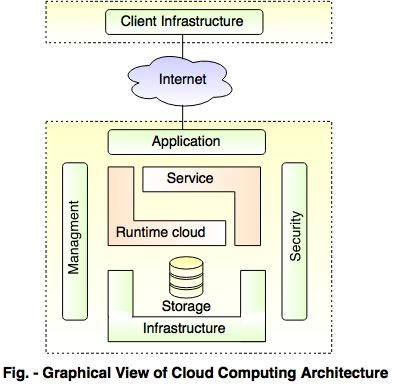
Cloud computing architecture forms the infrastructural backbone of global digital commerce. By replacing rigid, capital-intensive on-premise server rooms with elastic, on-demand compute and storage pools, cloud providers empower organizations to scale globally in seconds while optimizing operational expenses. Understanding cloud architectural paradigms is essential for modern IT leaders and systems architects.
1. Core Cloud Service Models: IaaS, PaaS, and SaaS
Cloud solutions are organized into three primary delivery tiers, each delineating distinct boundaries of customer control versus cloud provider management:
- Infrastructure as a Service (IaaS): Delivers virtualized compute nodes, block/object storage, and software-defined networking over the internet. The customer retains full administrative ownership over the operating system, middleware, runtime environments, and application binaries (e.g., AWS EC2, Microsoft Azure Virtual Machines, Google Compute Engine).
- Platform as a Service (PaaS): The cloud provider manages physical hardware, operating systems, database engines, and runtime dependencies. Development teams focus solely on writing application logic and deploying code (e.g., AWS Elastic Beanstalk, Heroku, Google App Engine).
- Software as a Service (SaaS): End-user software applications delivered over web browsers or API interfaces, managed entirely end-to-end by the vendor (e.g., Microsoft 365, Salesforce, Google Workspace).
2. Cloud Deployment Strategies: Public, Private & Hybrid
Selecting the optimal deployment topology depends on security requirements, regulatory compliance, and workload profiles:
- Public Cloud: Multi-tenant infrastructure operated by hyperscalers (AWS, Azure, GCP). Delivers near-infinite elasticity, global content delivery networks (CDNs), and pay-as-you-go financial models.
- Private Cloud: Dedicated single-tenant infrastructure maintained on-premise or in private colocation facilities. Maximizes data sovereignty, governance, and low-latency hardware access for defense, banking, and critical infrastructure.
- Hybrid Cloud: Seamlessly unites public cloud scalability with private cloud security. Enterprises burst seasonal web traffic to public clouds while retaining sensitive transactional ledgers within private on-premise databases.
3. Foundational Cloud Architecture Building Blocks
Resilient cloud architectures incorporate several core architectural subsystems:
- Virtual Private Clouds (VPC) & Micro-Segmentation: Logically isolated virtual network partitions. Public subnets host edge reverse proxies and API gateways, while private subnets isolate application clusters and backend databases with zero public internet exposure.
- Elastic Load Balancing & Auto-Scaling: Health-checked load balancers distribute incoming traffic evenly across availability zones. Auto-scaling groups dynamically provision or terminate compute instances based on CPU utilization and request queue depth.
- Serverless & Event-Driven Architecture (FaaS): Functions-as-a-Service (e.g., AWS Lambda, Azure Functions) execute stateless code snippets purely in response to event triggers (HTTP requests, queue messages, database updates), scaling to zero when idle to eliminate idle compute costs.
4. Cloud Security & The Shared Responsibility Model
Security within cloud environments operates strictly under the Shared Responsibility Model:
| Security Domain | IaaS | PaaS | SaaS |
|---|---|---|---|
| Physical Data Centers & Hypervisors | Cloud Provider | Cloud Provider | Cloud Provider |
| Operating System & Patching | Customer | Cloud Provider | Cloud Provider |
| Network Configuration & Firewalls | Customer | Shared | Cloud Provider |
| Application Logic & Code | Customer | Customer | Cloud Provider |
| Data Access, IAM & Encryption | Customer | Customer | Customer |
Frequently Asked Questions (FAQ)
What is the difference between IaaS and PaaS?
In IaaS, the customer manages the operating system, patches, and runtime environments. In PaaS, the cloud provider manages the OS and runtime layers, allowing developers to focus entirely on writing and deploying application code.
What is cloud elasticity versus cloud scalability?
Scalability refers to the system’s architectural ability to handle growing workloads by adding resources (vertical or horizontal scaling). Elasticity is the dynamic ability to automatically expand and shrink resources in real time to match fluctuating demand.
Who is responsible for customer data security in the cloud?
Under the Shared Responsibility Model, the customer is always responsible for securing customer data, configuring Identity and Access Management (IAM) policies, and enforcing encryption at rest and in transit.
Conclusion
A well-conceived cloud computing architecture transforms enterprise IT into an agile engine of innovation. By strategically aligning workloads with appropriate service models, leveraging multi-zone redundancy, and strictly enforcing the Shared Responsibility Model, organizations achieve unmatched performance, reliability, and cost-efficiency.
Enterprise FinOps & Multi-Cloud Cost Optimization
Uncontrolled cloud spending represents a primary operational challenge for enterprise infrastructure teams. Implementing effective Cloud Financial Operations (FinOps) requires automating resource hygiene, right-sizing overprovisioned virtual instances, and purchasing committed use discounts (AWS Savings Plans, Azure Reserved Instances).
- Automated Idle Cleanup: Terminate orphaned EBS volumes, unassociated Elastic IPs, and stale load balancers via daily scheduled serverless jobs.
- Spot & Preemptible Workloads: Run stateless microservices and batch analytics on spot compute instances with automated interruption draining.
- Storage Lifecycle Policies: Transition cold telemetry and archival database backups from standard object storage to immutable archive storage tiers automatically after 90 days.